

2-Day Mt. Fuji Climbing Private Tour - Gotemba Trail (Prince Route)
Walk through a 300-year-old eruption crater on Mt. Fuji's quietest trail.
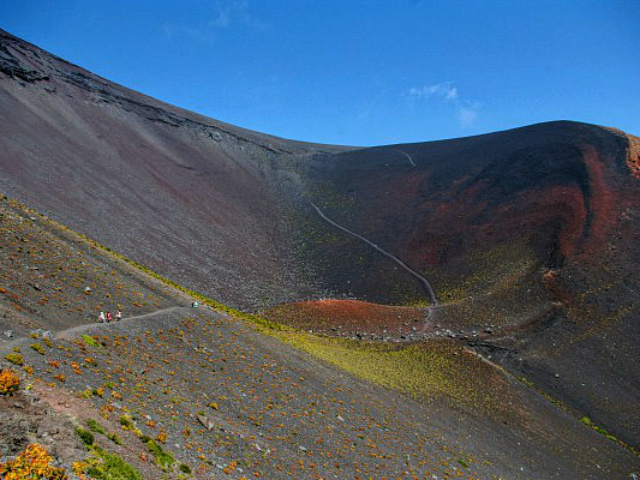
The Prince Route follows the path Japan's Crown Prince (now Emperor) took when he climbed Mt. Fuji in 2008. Starting from Fujinomiya 5th Station at 2,380 meters, you traverse the immense Hoei Crater formed by Mt. Fuji's most recent eruption in 1707 before joining the Gotemba climbing trail for the upper ascent and summit. At 1.3 kilometers in diameter, the Hoei Crater is larger than the summit crater itself, and walking through its reddish-brown volcanic walls and layered strata gives you an encounter with Mt. Fuji as a living geological force that no other route can match.
Despite the Gotemba Trail's reputation as Mt. Fuji's most demanding route, the Prince Route is actually the lightest climbing option Fujisan Curator offers. The key is the starting elevation: by beginning at Fujinomiya's higher 5th Station rather than Gotemba's much lower trailhead, you gain roughly 1,300 meters of elevation instead of 2,300, then join the Gotemba trail above the crater, where the terrain opens into vast, stark volcanic solitude that few climbers ever experience.
This route appeals to a wide range of travelers. Whether you're drawn to volcanic landscapes and geological drama, seeking the quietest possible Mt. Fuji climb, or intrigued by walking in imperial footsteps through a historic eruption site, the Prince Route delivers a mountain experience that feels like genuine exploration rather than following a well-worn tourist path. You should be comfortable with sustained effort over two days at altitude, though the physical demands are comparable to other summit routes.
Pacing, mountain hut selection, and timing are adjusted based on your fitness, weather conditions, and summit priorities. We plan these details together during your consultation.
What this trail reveals
Hoei Crater traverse
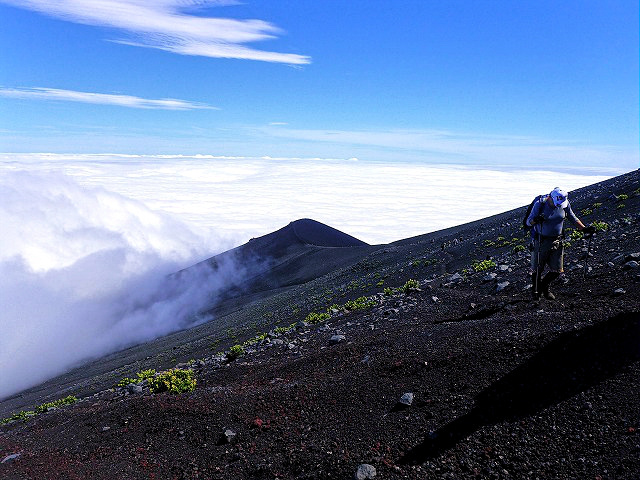
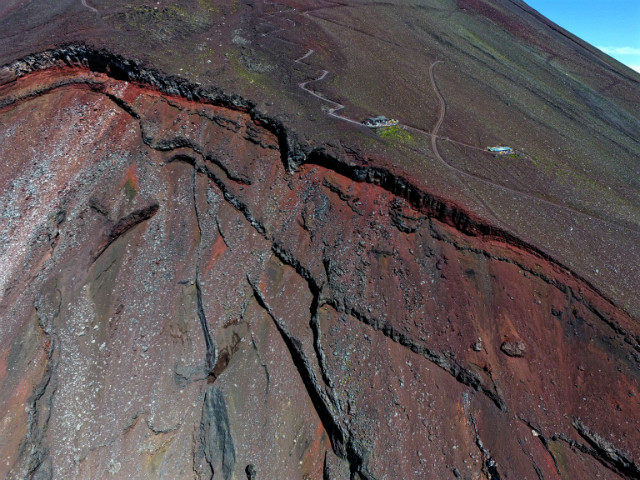
Walk through the enormous crater formed by Mt. Fuji's most recent eruption in 1707. At 1.3 kilometers across, larger than the summit crater itself, this is where Mt. Fuji stops being the graceful icon from postcards and becomes a raw volcanic force. Reddish-brown walls rise around you, layered strata expose centuries of eruption history, and the path across the crater floor is one of the few places on this mountain where you look up and see nothing but crater rim against sky. The crater is where you experience Mt. Fuji's weather as a living force. Turbulent winds drive clouds into, through, and out of the crater basin, forming and dissolving around you in ways that change by the minute. It's the part of this climb that clients consistently say they didn't expect.
The "Prince Route" ascent
Follow the same path Japan's Emperor climbed in 2008, ascending from Fujinomiya 5th Station through the Hoei Crater to the Gotemba climbing trail, an efficient route that pairs the best trailhead access with the quietest upper trail on the mountain.
Volcanic wilderness solitude
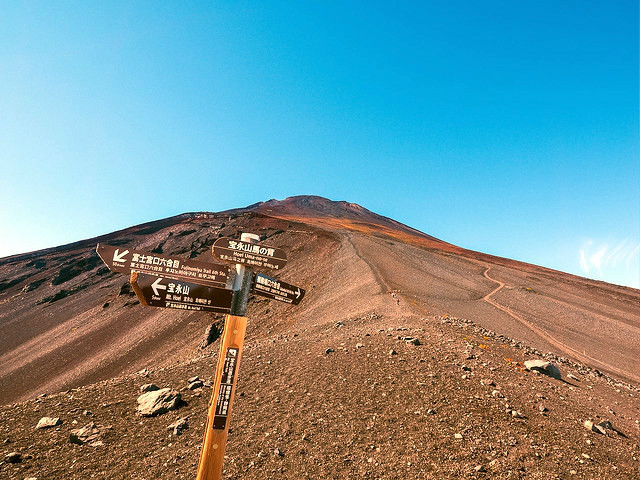
The Gotemba Trail sees remarkably few climbers. Above the crater, the terrain opens into vast ash-colored slopes where the only features are scattered volcanic rock and the trail winding upward. During the ascent, it's common to go an hour or more without seeing another person in any direction — just the slope, the sky, and the sound of your own boots on gravel. It changes how you experience the mountain. On the popular trails, Mt. Fuji can feel like a crowded event. Here, it feels like what it actually is: a 3,776-meter active volcano, and you're walking up it.
Sunrise from the mountain hut
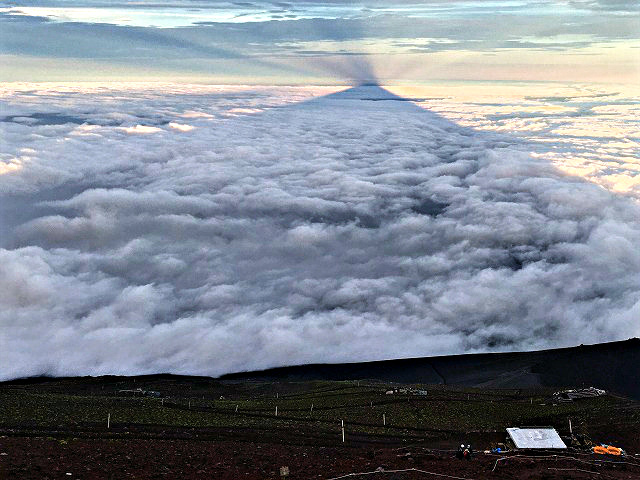
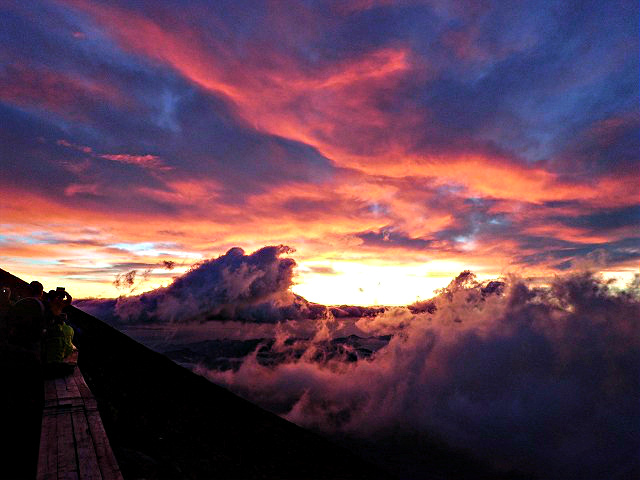
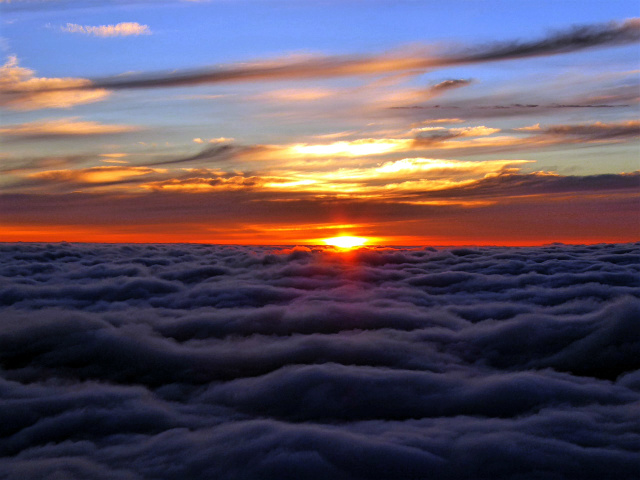
Greet the dawn from your mountain hut on the Gotemba trail's eastern slope — no night climbing required. The conventional approach pushes for summit sunrise, requiring a pre-dawn ascent in darkness that concentrates climbers and increases risk. We take a different path: depart after breakfast in full daylight, ascending when the already-quiet Gotemba trail is at its absolute emptiest. The summit, too, is far less crowded by mid-morning than at dawn. This schedule consistently produces a better overall climbing experience. Summit sunrise is available if you specifically request it, and we'll discuss the trade-offs during planning.
Osunabashiri sand-running descent
The Gotemba Trail is home to the Osunabashiri, Japan's longest volcanic gravel descent. The Prince Route takes you through a shorter section of this famous slope, enough to experience the technique of bounding downhill through soft ash, each step sinking into the gravel, before the route turns back toward Hoei Crater and the Fujinomiya 5th Station. I demonstrate the stride before we start. It's a taste of the Gotemba trail's signature descent without the full length that the complete trail demands.
Tour details
Private tour (single booking) for up to 5 persons
Season: Early July (early summer) through early September (early fall) — dates coordinated around weather
Duration: 2 days / 1 night (overnight at mountain hut)
Starts/Ends: Fujinomiya Trail 5th Station in Fujinomiya city, Shizuoka
Elevation: 2,380m (5th Station) to 3,700m (summit) — approx. 1,300m gain
Physical Level: Strenuous — 12–13 hours total climbing over 2 days; requires good fitness and endurance
Price: From JPY 222,000/tour
Included:
Guiding by a licensed local Mt. Fuji climbing guide
Personal consultation and support for tour/travel planning and preparation in each stage: pre-, in-, post-tour
Not Included:
Lodging and meals charges (Fujisan Curator will book a mountain hut for you on your behalf)
Mountain entry/climbing fee
Miscellaneous personal expenses such as use of toilet, food, drink, and souvenirs
Transportation to/from tour start/end location (transport can be arranged)
Specific mountain hut selection and tour schedule/timing are adjusted based on your climbing dates, conditions, and pace.
Why this tour
Walk through Mt. Fuji's most recent eruption.
The Hoei Crater is the centerpiece of this climb — a 1.3-kilometer volcanic scar that you walk through, not around. No other Mt. Fuji route takes you inside an eruption crater. The turbulent cloud dynamics, the exposed eruption strata, the sheer scale of the basin. This is Mt. Fuji as a geological force, not a postcard.
The lightest path to the summit.
Despite the Gotemba Trail's reputation as the hardest route, the Prince Route is actually the lightest climbing option available. By starting at Fujinomiya's higher trailhead (2,380m) and traversing into Gotemba above the demanding lower section, you gain roughly 1,300m of elevation instead of 2,300m. Gotemba's volcanic solitude, accessible demand.
Weather-first flexible scheduling.
Climbing dates are coordinated within a flexible window using professional mountain weather forecasting. This ensures optimal conditions for your experience rather than gambling on a fixed date — a difference that matters significantly on exposed volcanic terrain above 3,000 meters.
A local guide who reads this mountain.
The Hoei Crater's eruption strata, the cloud dynamics, the timing that produces an hour or more of complete solitude on the upper Gotemba trail — these are details that come from years of guiding this specific route, not from research. I interpret the volcanic landscape as we climb, and you experience it with context that an independent climb cannot provide.
Explore my Mt. Fuji climbing tours
Fujisan Curator offers three climbing experiences on Mt. Fuji's less-traveled trails — each with its own character.
Subashiri Trail
Forest to summit
2-day · ~1,700m gain
Prince Route (Gotemba)
Volcanic crater traverse
2-day · ~1,300m gain
You are hereOhachimeguri
Sacred summit circuit
Add-on · ~2 hrs at summit
Not sure which suits you? See our Mt. Fuji Climbing Tours overview for a comparison of all options.
Ready to Climb Prince Route?
Send your inquiry with preferred dates and any questions. I'll respond within 24 hours with availability, scheduling recommendations, and next steps for planning your climb.
As part of the planning process, I offer a free 30-minute video consultation to discuss your climb in detail — trail conditions, weather strategy, fitness preparation, and anything else you'd like to know from someone who actively guides these trails.