

Ohachimeguri Summit Trail Private Tour
Circle the sacred crater rim at 3,776 meters — the pilgrimage that completes your Mt. Fuji climb.
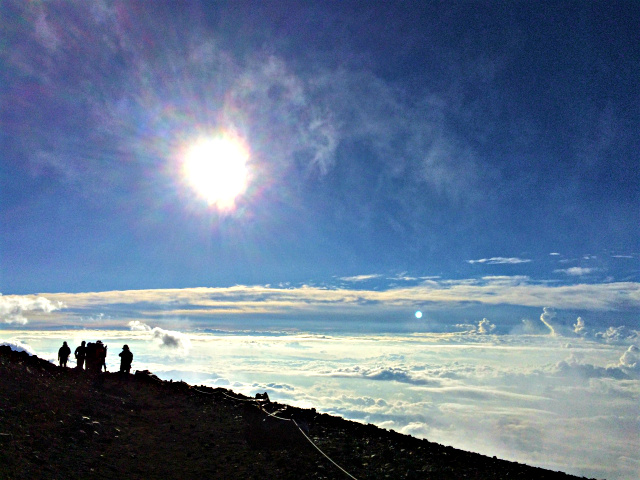
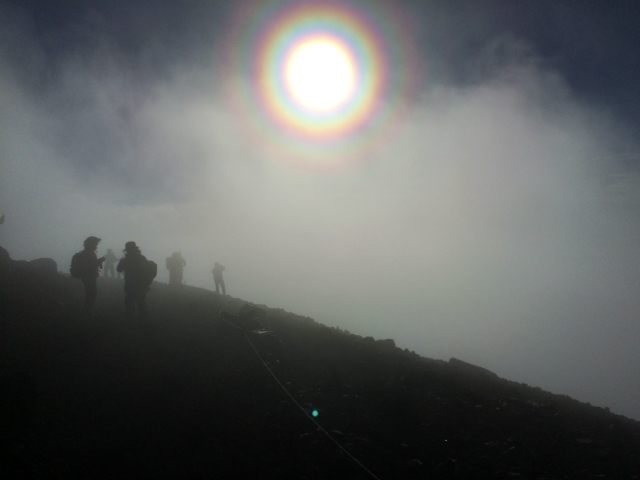
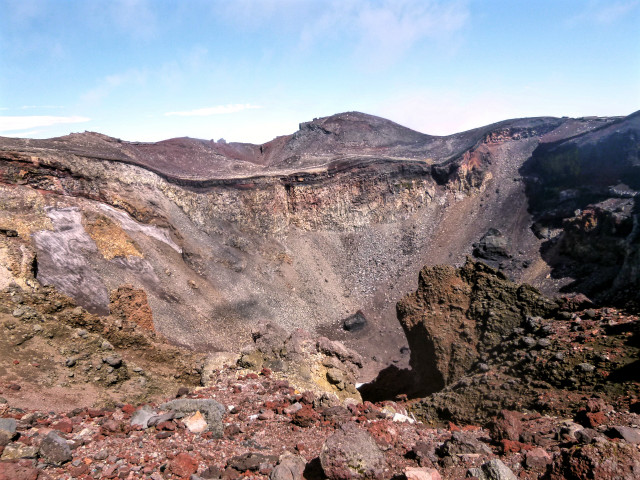
Ohachimeguri is the sacred circuit around Mt. Fuji's summit crater — a pilgrimage route that has been the ultimate goal for Fuji worshippers for centuries. This roughly 2-hour trek follows the crater rim through all eight peaks, including Kengamine (3,776m), the true highest point of Japan. Below your feet, the massive volcanic crater opens — a sacred area called Naiin, where Dainichi Nyorai (the cosmic Buddha) was historically enshrined. Above you, nothing but sky.
For ancient Fujiko pilgrims, reaching the summit was only half the journey; Ohachimeguri was the spiritual completion. The eight peaks circling the crater symbolize the eight petals of the lotus flower — the seat of the Buddha. Today, walking this route connects you to centuries of mountain worship while delivering some of the most dramatic volcanic scenery accessible anywhere in Japan: the crater's interior walls, the Osawa Failure visible from its headwall, and a 360-degree panorama that stretches from the Pacific Ocean to the Japan Alps.
This tour is an optional add-on to either the Subashiri or Gotemba (Prince Route) 2-day climbing tour. It suits climbers who want the complete Mt. Fuji experience — summit plus crater circuit — and who have the fitness and weather window to extend their time at the top. Whether you're motivated by the spiritual significance, the volcanic geology, or simply the desire to stand at Japan's absolute highest point, Ohachimeguri transforms a summit climb into something deeper.
Weather and physical condition on summit day determine whether Ohachimeguri proceeds. We assess conditions together and make the call based on safety and experience quality.
What this trail reveals
Complete crater circuit
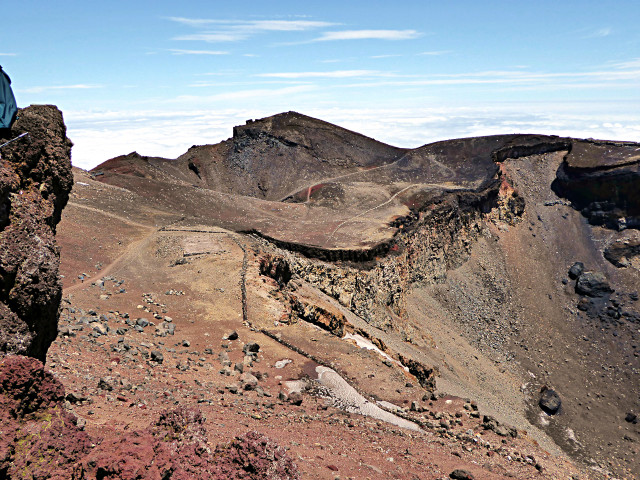
Walk the full Ohachimeguri loop — approximately 2.6 km around the summit crater rim, passing through all eight peaks in a clockwise direction. This is the pilgrimage route that Fujiko worshippers considered the sacred culmination of their Mt. Fuji ascent. The character of the circuit changes as you move around: the western rim is more sheltered; the eastern section catches the full force of prevailing winds; the southern stretch passes the oldest shrine. Each section shows you a different face of the summit and a different perspective of the landscape far below.
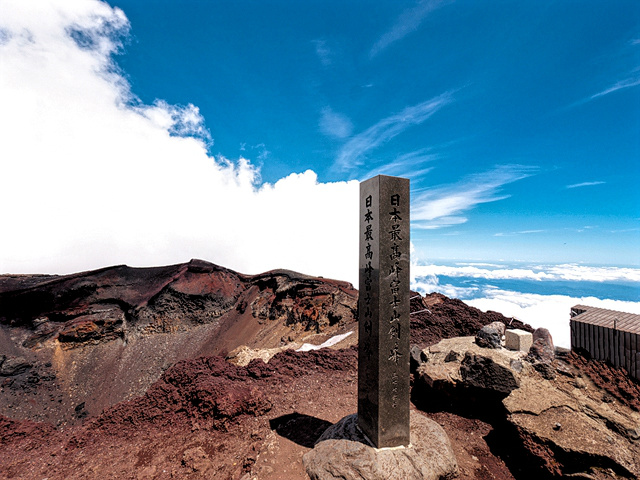
Kengamine — Japan's highest point
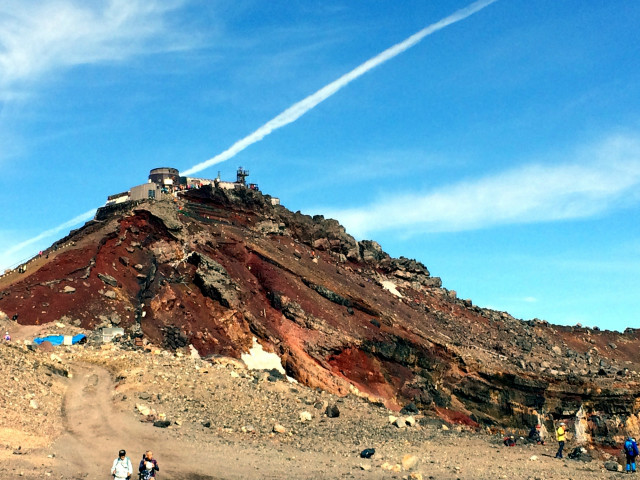
Stand at exactly 3,776 meters on the Kengamine peak, the true summit of Mt. Fuji and the highest point in Japan. It's located across the crater from where the main climbing trails arrive, which is why the majority of summit climbers never reach it. They stop at the first torii gate, take their photo, and descend, unknowingly short of the actual peak. If you've invested the effort to climb this mountain, standing at its genuine highest point matters.
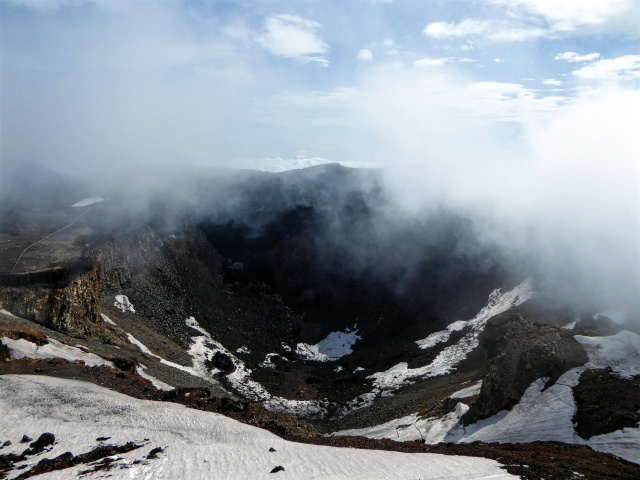
Volcanic crater views
Look directly into the Naiin — the inner sanctum of Mt. Fuji's summit crater, formed over 2,000 years ago. From the rim, the exposed volcanic walls reveal layers of eruption history in cross-section: older deposits below, newer material above, the whole geological timeline of this mountain visible in a single view. The summit crater predates the famous 1707 Hoei eruption by thousands of years — what you're looking into is far older than the crater on the slope below.
Osawa Failure headwall
View Japan's most dramatic geological collapse site from directly above. The massive valley that gouges Mt. Fuji's western face extends over 2 kilometers from just below where you stand to near the 5th station. The headwall drops away sharply from the circuit path, and on clear days, you can trace the collapse all the way down the mountain's flank. It reframes Mt. Fuji's perfect cone: the mountain is actively eroding on this side, losing roughly 150,000 cubic meters of material each year.
Sacred geography interpretation
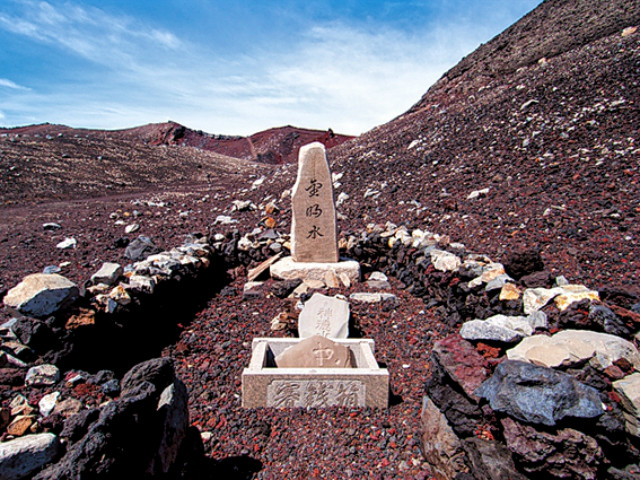
Each of the eight peaks around the crater has a name, a deity, and a position in a Buddhist mandala that Fujiko pilgrims would have known by heart. I connect what you're seeing — rock formations, shrines, the crater below — to what this landscape meant to the people who considered it the most sacred place in Japan. Most visitors walk this circuit seeing geology. You'll walk it understanding why it was mapped as a lotus flower.
360-degree panorama at 3,776m
On clear days, views extend to the Japan Alps, Mt. Yatsugatake, the Izu Peninsula, and the Pacific Ocean. At Japan's highest point, the geography of the entire region reveals itself below you — Suruga Bay and the Izu Peninsula to the south, the Kanto Plain stretching toward Tokyo to the east, the Southern Alps ridgeline to the west. I identify landmarks as we walk the circuit; the view shifts with every section of the rim.
Tour details
Private tour (single booking) for up to 5 persons
Prerequisite: Must be combined with Subashiri Trail or Gotemba Trail (Prince Route) 2-day climbing tour
Season: Early July (early summer) through early September (early fall)
Duration: 2 hours (added to Day 2 of climbing tours)
Starts/Ends: Summit (exact locations depend on route of ascent/descent)
Elevation: Summit level — 3,700m to 3,776m circuit
Physical Level: Very strenuous — high altitude, exposed terrain, cumulative fatigue from climb
Weather Dependency: High — strong winds, poor visibility, or approaching weather will cancel the circuit (safety-first policy)
Price: From JPY 25,000/tour (add-on to climbing tours)
Included:
Guiding by a licensed local Mt. Fuji climbing guide
Not Included:
Miscellaneous personal expenses such as use of toilet, food, drink, and souvenirs
Ohachimeguri proceeds only when weather and physical conditions allow. This is assessed on summit day in consultation with you.
Why this tour
The summit experience most climbers skip.
The majority of Mt. Fuji's 200,000+ annual climbers stop at the first arrival point, photograph the summit marker, and descend. Ohachimeguri takes you around the entire crater rim through all eight peaks — including Kengamine, the actual highest point in Japan. It transforms a summit visit into a summit experience.
Sacred geography you can't read alone.
The eight peaks, the lotus mandala, the Naiin crater, the shrines — these are features that exist for every visitor, but their centuries of spiritual significance requires interpretation to recognize. Walking the circuit with a guide who knows the Fujiko pilgrimage tradition changes what you see from volcanic geology into sacred cosmology.
The geological perspective no other viewpoint provides.
From the crater rim, you see Mt. Fuji's interior structure — eruption strata in cross-section, the Osawa Failure headwall eroding 150,000 cubic meters per year, and a summit crater far older than the famous Hoei eruption scar on the slope below. No photograph from below captures what the mountain reveals from within.
Explore my Mt. Fuji climbing tours
Ohachimeguri is an add-on to either climbing tour below. Each offers a distinct route to the same summit.
Subashiri Trail
Forest to summit
2-day · ~1,700m gain
Prince Route (Gotemba)
Volcanic crater traverse
2-day · ~1,300m gain
Ohachimeguri
Sacred summit circuit
Add-on · ~2 hrs at summit
You are hereNot sure which suits you? See my Mt. Fuji Climbing Tours overview for a comparison of all options.
Want to Complete the Full Mt. Fuji Experience?
Ohachimeguri is available as an add-on to either the Subashiri Trail or Gotemba Trail (Prince Route) 2-day climbing tour. Include it in your inquiry and we'll discuss whether conditions and timing make it feasible for your climb.
As part of the planning process, I offer a free 30-minute video consultation to discuss your climb in detail — including whether Ohachimeguri is realistic for your fitness level and schedule.